

Table of Contents
MO messages still need modern handling in SMS infrastructure, even when outbound traffic gets most of the attention.
Platforms are usually designed around the question of how to submit messages, route them to providers, respect throughput limits and understand delivery outcomes. Those are important parts of the operation, but they are not the whole story.
SMS is not always a one-way channel.
In many real-world messaging environments, messages also come back. A customer may reply to a notification. A user may send an opt-out keyword. A device may submit a status update. A business workflow may depend on inbound responses from users, customers, field teams or external systems.
These inbound messages are usually known as MO messages, or mobile-originated messages.
They may look simple from the outside, but they need proper handling inside the gateway layer.
Inbound SMS Is Part of the Operation
MO traffic is sometimes treated as secondary because it is not always the main volume driver in an SMS platform. Outbound A2P traffic is often larger, more visible and more directly connected to campaign delivery, authentication flows or customer notifications.
That does not make inbound SMS less important.
An inbound message may carry business-critical intent. It may contain a reply, a confirmation, a cancellation request, a support signal, a consent update or an opt-out instruction. In some environments, it may also be part of a machine-to-machine or operational workflow where the inbound message triggers another system action.
If the gateway receives that message but does not handle it correctly, the problem is not just technical. The platform may miss customer intent, fail to update compliance state, or lose a signal that another system expected to receive.
For that reason, MO handling should not be an afterthought. It belongs in the same operational conversation as routing, delivery receipts and throughput control.
Receiving the Message Is Only the First Step
MO messages become useful only when the gateway can preserve the right context and forward them to the systems that need to act on them.
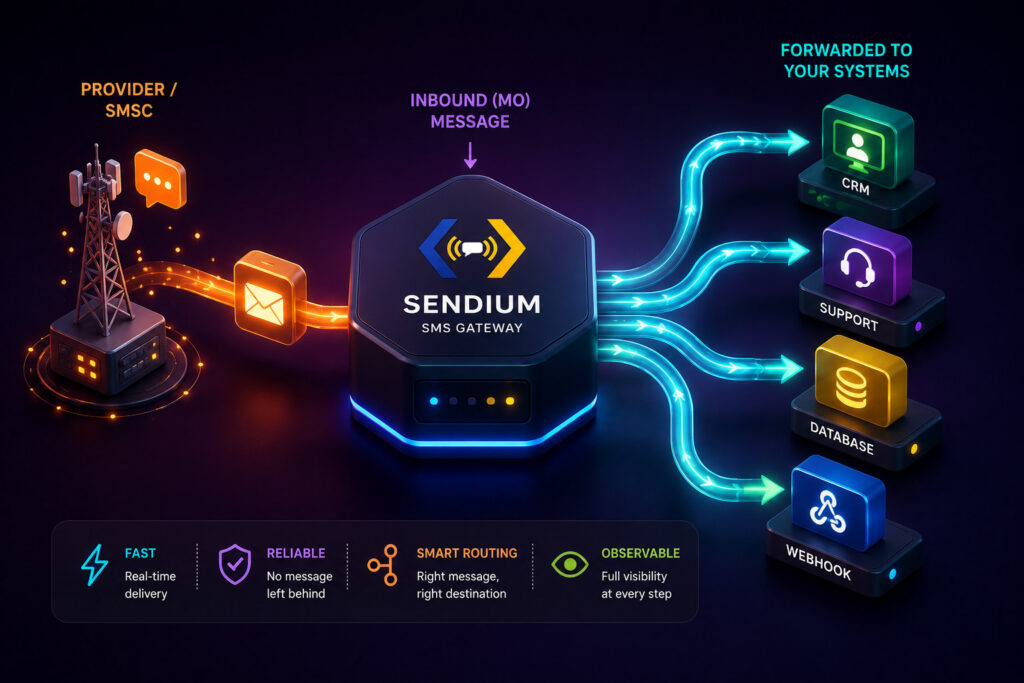
When an inbound SMS reaches the gateway, the first requirement is basic connectivity. The gateway has to receive the message from the provider or SMSC through the relevant protocol path.
But receiving the message is only the beginning.
The gateway also has to understand where that message should go next. It may need to forward it to an HTTP endpoint, pass it into an internal platform, connect it to a customer account, preserve the sender and destination context, or make it available to another service that depends on inbound messaging.
In practice, MO handling is about turning an inbound telecom event into something the rest of the platform can use.
This is where gateway behavior matters. If inbound messages are treated as loose events with unclear ownership, they become hard to operate. If they are forwarded inconsistently, customer systems may receive incomplete or unexpected information. If routing rules are too rigid, operators may struggle to support multiple customers, applications or use cases through the same gateway layer.
Modern handling means making the inbound path explicit, configurable and understandable.
Replies Need Context
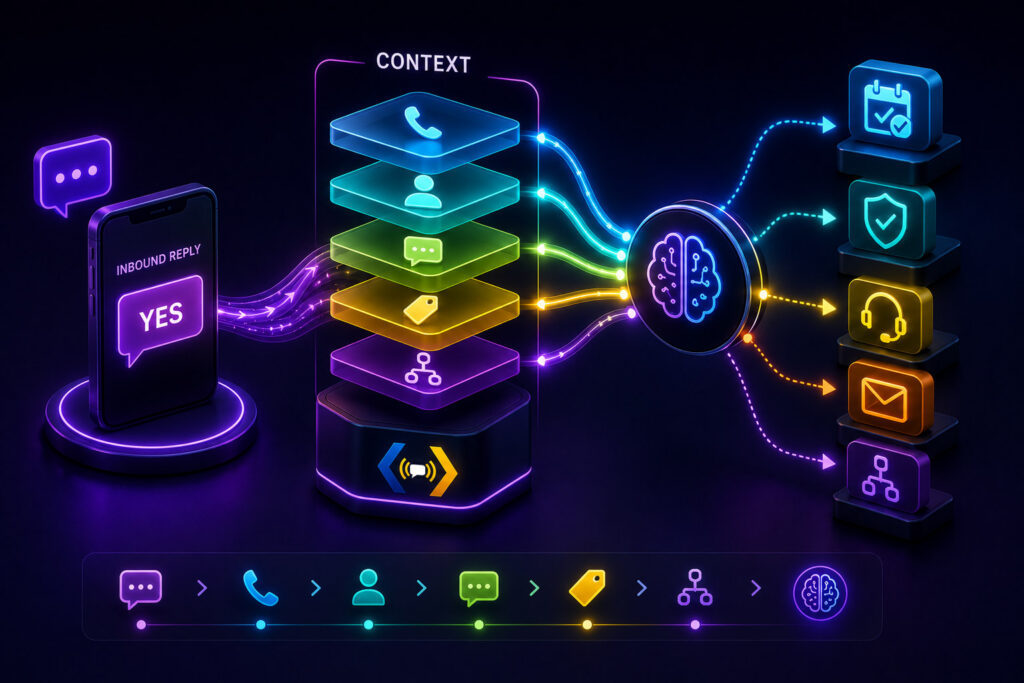
A reply is rarely useful without context.
The platform needs to know who sent it, which number received it, which customer or application owns that destination, and whether the message relates to an earlier outbound interaction. Depending on the use case, it may also matter whether the message came from a short code, a long number, a virtual mobile number or another sender identity.
This context determines what happens next.
A simple “YES” may mean nothing by itself. In the right workflow, it may confirm an appointment, accept a notification, approve an action or complete a user interaction. The same is true for “STOP”, “HELP”, “NO” or any other keyword-based response. The meaning does not live only in the text of the message. It lives in the relationship between the message, the destination number, the customer setup and the business process behind it.
That is why MO routing cannot be reduced to simply accepting inbound traffic.
The gateway needs enough context to forward the message to the correct system and preserve the information that system needs to interpret it.
Opt-Outs Need Reliable Handling
One of the most important MO use cases is opt-out handling.
When a user sends a stop keyword, the platform may need to update consent state, suppress future traffic, notify a customer system or trigger compliance logic. The exact behavior depends on the environment, the sender setup and the responsibilities of the platform, but the operational requirement is clear: the inbound opt-out must not get lost.
This is where inbound handling becomes directly connected to trust.
If an opt-out message is received but not routed correctly, the business may continue sending messages to someone who has already asked to stop. That can create customer frustration, support issues and compliance risk. Even if the gateway is not the final system of record for consent, it still plays an important role in making sure the inbound signal reaches the right place.
Reliable MO forwarding helps protect that flow.
It gives the surrounding platform the information it needs to act on user intent instead of leaving inbound traffic buried inside provider connectivity.
The HTTP Side Matters
In many SMS platforms, the systems that need to receive MO messages are not telecom systems.
They are web applications, customer platforms, campaign tools, CRMs, support systems, automation services or internal APIs. Those systems often expect inbound messages to arrive through HTTP callbacks or similar application-facing mechanisms.
This makes protocol bridging important.
The MO may arrive through provider-side SMS connectivity, often through the SMPP protocol, but the system that needs to act on it may live behind an HTTP endpoint.
This is one of the reasons a modern SMS gateway should not be designed only around outbound submission. It also needs a clear model for receiving and forwarding inbound traffic.
The inbound side may be smaller in volume, but it is often where user intent enters the platform.
MO Handling Should Be Observable
Inbound messages can create operational questions just like outbound messages do.
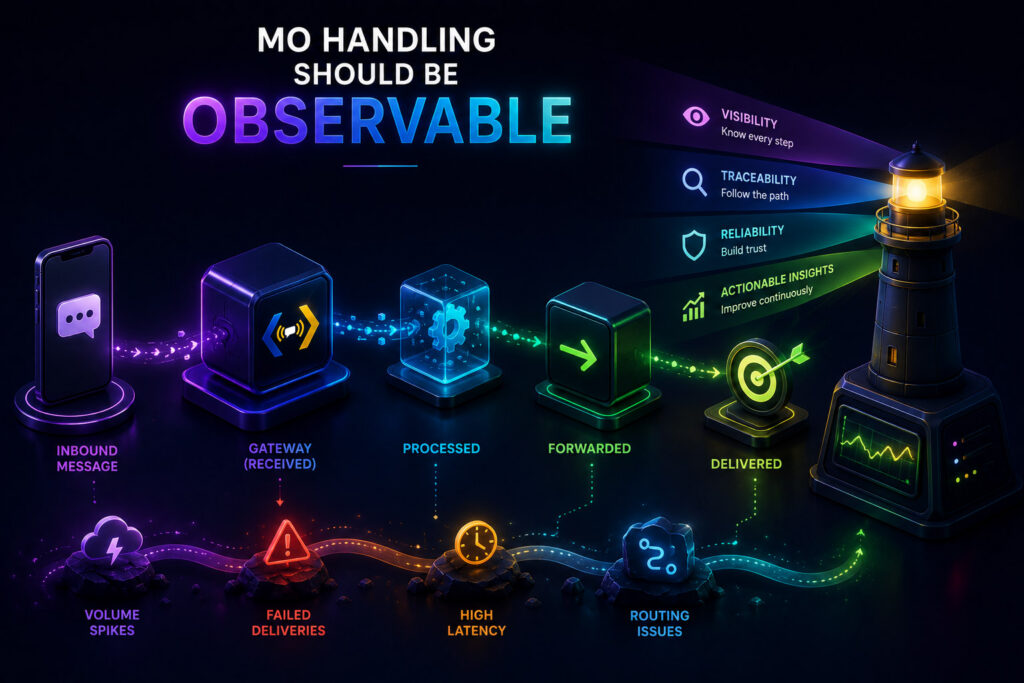
Was the MO received? Which provider connection delivered it? Which destination number was used? Which customer or endpoint was selected? Was the forwarding attempt successful? If the target application was unavailable, what happened to the message?
Without this kind of visibility, inbound SMS becomes hard to support.
A customer may say that replies are missing. A compliance team may ask whether an opt-out was received. A developer may need to confirm whether their callback endpoint is being called correctly. In those situations, the team needs more than a general statement that MO handling exists. They need to understand the path the inbound message took.
That does not mean every system needs a complex dashboard.
It means the gateway should expose enough operational information for teams to reason about inbound flow, diagnose forwarding problems and confirm that important messages are reaching the systems that depend on them.
Modern MO Message Handling Is About Reliability, Not Complexity
MO messages do not need to make the gateway unnecessarily complicated.
The goal is not to build a massive workflow engine inside the SMS gateway. The goal is to handle inbound traffic in a way that is predictable, configurable and compatible with the systems around it.
A good gateway should make the basic operational questions easier to answer. Where did the inbound message come from? Which destination number received it? Which customer or application should get it? Was it forwarded successfully? What happens if forwarding fails?
When those answers are clear, inbound SMS becomes part of the platform’s normal operating model instead of a side path that only gets attention when something breaks.
Modern MO handling is not about adding complexity for its own sake.
It is about making inbound messaging reliable enough to depend on.
Where Sendium Fits
For Sendium, MO messages are part of the broader gateway operation, because inbound replies, opt-outs and status signals need to move reliably from telecom connectivity toward application-facing systems.
Sendium is designed around the idea that an SMS gateway should handle more than simple outbound message submission.
The project is also available as open-source software through Sendium on GitHub, where developers and operators can explore the gateway, documentation and ongoing development.
That includes MO forwarding.
In a real gateway environment, inbound messages may arrive from provider-side connectivity and need to be passed toward application-facing systems. Sendium’s role at the gateway layer is to help bridge that operational gap: receive the inbound message, preserve the relevant context and forward it so that the surrounding platform can act on it.
This matters because MO messages often represent user intent. A reply, opt-out, confirmation or inbound status message should not disappear inside telecom connectivity. It should become usable by the systems that need it.
For teams building or operating SMS infrastructure, the important question is not only how to send messages out.
It is also how to handle the messages that come back.
Outbound traffic may start the conversation, but MO messages often carry the response. A modern SMS gateway needs to treat that response as part of the operation, not as an afterthought.